OEM & Private Label
Dermal Filler Private Label Checklist: What to Confirm Before OEM Production
Private-label dermal filler projects move faster when the buyer and manufacturer confirm the same details before artwork and production begin. Most delays are not caused by the filler itself; they come from unclear packaging requirements, missing files, last-minute specification changes or incomplete market information.
In This Article
Private-label dermal filler projects move faster when the buyer and manufacturer confirm the same details before artwork and production begin. Most delays are not caused by the filler itself; they come from unclear packaging requirements, missing files, last-minute specification changes or incomplete market information.
This checklist is designed for distributors, importers and brand owners preparing a private-label hyaluronic acid dermal filler order.
1. Confirm the target market first
Start with the country or market where the product will be sold. Packaging language, label content, documentation and commercial requirements can vary. The manufacturer should know the target market before final artwork is approved.
2. Select the product profile
Do not begin with packaging design before confirming the product architecture. Decide whether you need one profile or a complete range.
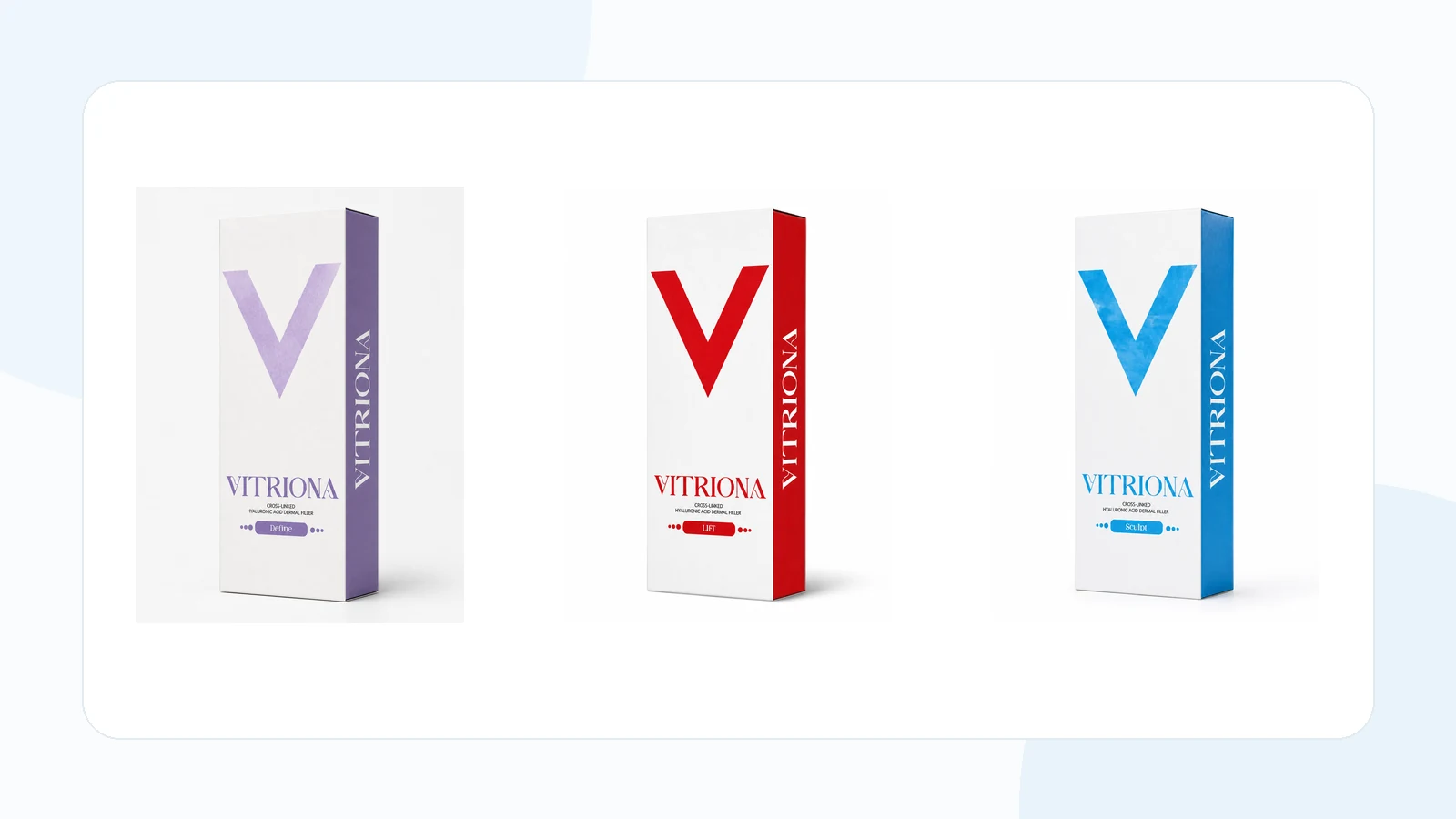
VITRIONA offers three monophasic HA filler profiles:
- **DEFINE** — balanced profile.
- **LIFT** — enhanced-support profile.
- **SCULPT** — structural profile.
3. Confirm the volume format
VITRIONA currently offers 1.1 mL and 10 mL formats. Confirm the format for each SKU before the packaging dieline and label layout are finalized. A 1.1 mL product and a 10 mL product require different packaging decisions even when the corresponding formulation is the same.
4. Define exactly what will be customized
Private label is not one single option. Create a component list and mark each item as standard or customized.
- Product label
- Syringe
- Needle
- Blister packaging
- Outer box
- Instructions for use
- Packaging paper / dialysis paper where applicable
The more components you customize, the more approvals are required before production.
5. Lock the technical information before design
Designers should not guess technical specifications. Confirm product name, volume, HA concentration, storage information, shelf life and any other required product details first. Then create the artwork around approved information.
6. Prepare editable artwork files
Logos, fonts, vector artwork and packaging layouts should be supplied in editable formats whenever possible. If the manufacturer needs to rebuild a low-resolution image, errors and delays become more likely.
Use one approved master version and avoid sending multiple “final” files through different chat channels.
7. Review the sample or pre-production version
Before bulk production, review the relevant sample, print proof or packaging mock-up. Check spelling, product names, volume, colors, barcode information, label placement and required market text.
This step is especially important when several product profiles use similar packaging.
8. Confirm MOQ and lead time
VITRIONA’s current OEM MOQ is 100 pieces. The regular OEM lead time is approximately 10–15 days after requirements are confirmed, although actual timing can vary with quantity and packaging complexity.
For non-customized regular orders, the current MOQ is 500 pieces and the regular lead time is generally 3–7 days.
9. Confirm available documentation for your market
Ask about documentation before production, not after shipment preparation. Requirements vary by country, product type and importer. Share the target market and the documents your local partner expects so availability can be reviewed early.
10. Approve the final production checklist in writing
Before production starts, the final confirmation should include:
- Product profile and volume
- Order quantity by SKU
- Packaging components
- Approved artwork version
- Shipping marks where required
- Target market
- Lead-time confirmation
- Any agreed sample or pre-production approval
A simpler path to private-label production
Good OEM projects are built on controlled information. Confirm the product first, the packaging second and production only after the commercial and artwork details are aligned.
VITRIONA supports private-label projects for distributors and brand owners using the DEFINE, LIFT and SCULPT monophasic filler range. Review the full OEM / Private Label process or start an OEM inquiry with your target market and required products.
For professional and B2B informational purposes only. Documentation, label requirements and regulatory requirements vary by market.
VITRIONA B2B SUPPORT