Dermal Fillers
1.1 mL vs 10 mL Dermal Fillers: How Volume Format Changes Product Strategy
Volume format is a commercial decision as well as a product specification. For distributors and private-label buyers, choosing between 1.1 mL and 10 mL dermal filler formats affects packaging, inventory, customer segmentation and how a product range is positioned.
In This Article
Volume format is a commercial decision as well as a product specification. For distributors and private-label buyers, choosing between 1.1 mL and 10 mL dermal filler formats affects packaging, inventory, customer segmentation and how a product range is positioned.
The formulation can stay the same while the format changes
Within the VITRIONA range, the corresponding 1.1 mL and 10 mL versions use the same profile formulation. The difference is the fill volume and the packaging format. This allows buyers to extend a familiar product profile into more than one commercial format.
Why 1.1 mL is a useful core format
A 1.1 mL syringe format is easy to place within a conventional professional filler portfolio. It gives distributors a clear unit-based SKU, supports straightforward inventory counting and works well when a market is accustomed to individually packaged professional syringes.
For a new brand, 1.1 mL can also be the simpler format for launching multiple profiles because each SKU can be clearly differentiated by name, color and product positioning.
Why buyers add a 10 mL format
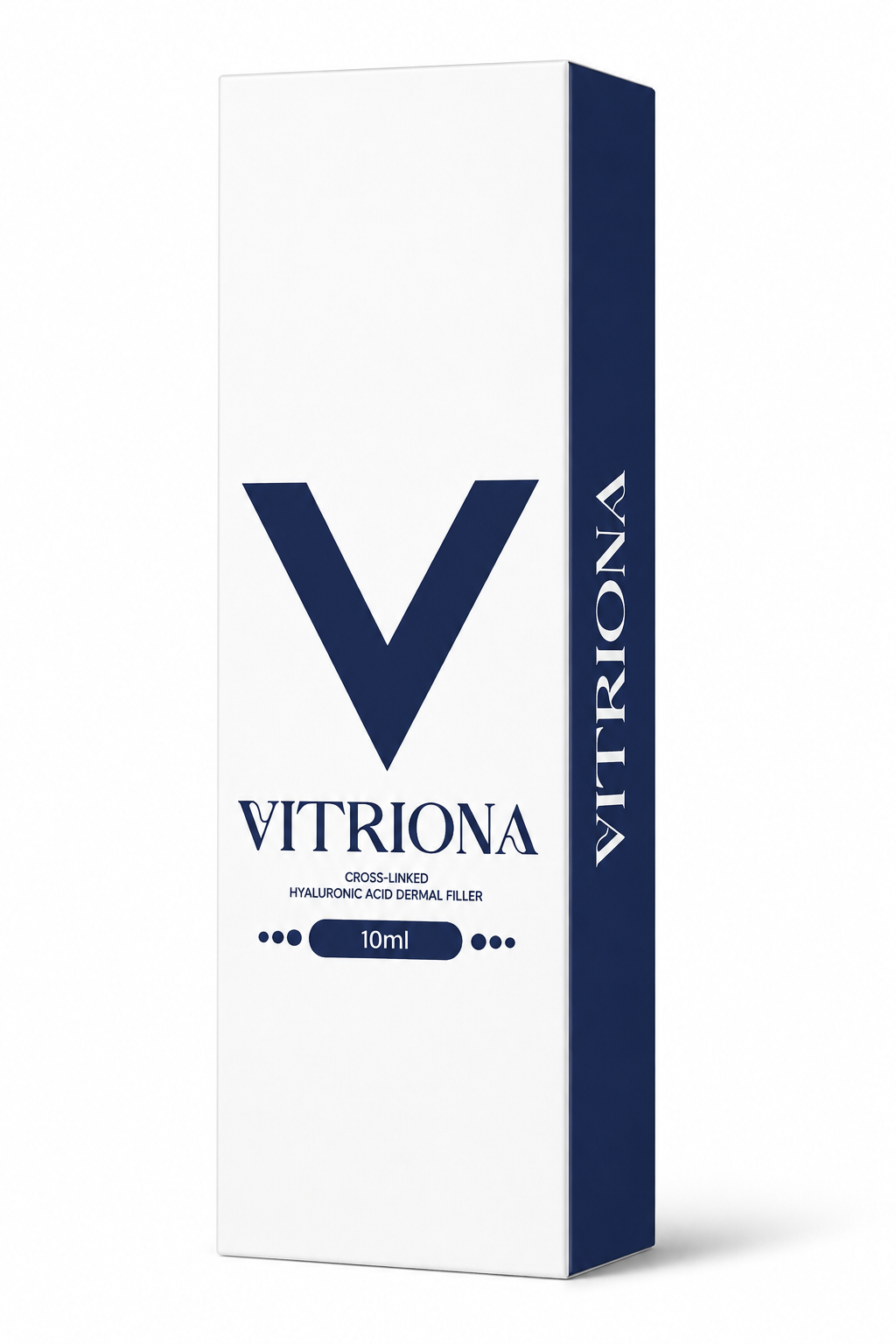
A 10 mL format creates a different commercial proposition. It can help a distributor build a broader catalogue and serve professional buyers looking for a larger-volume presentation. Because the pack size is different, the sales message, packaging and order planning should also be different.
The larger format should not simply be treated as “ten times the small syringe” in marketing. It deserves its own product page, packaging visual and buyer explanation.
Compare formats using five B2B questions
1. Who is the target customer?
Map the format to your actual customer base: distributors, wholesalers, clinic groups or professional buyers. Avoid stocking a large-volume format only because the unit price looks attractive.
2. How will inventory be managed?
Different formats create different carton sizes, stock values and re-order patterns. Build separate SKU codes and track demand independently.
3. Does the packaging explain the difference clearly?
Customers should be able to identify the product profile and volume immediately. Private-label projects need packaging architecture that prevents confusion between 1.1 mL and 10 mL versions.
4. Are the technical specifications aligned?
If the formulation is the same across two volume formats, technical documents should present that relationship consistently. Where any component differs, it should be clearly documented.
5. Does each format have a commercial reason to exist?
A good portfolio avoids duplicate SKUs without a clear buyer need. Add formats when they create genuine commercial coverage rather than simply increasing catalogue size.
VITRIONA volume options
DEFINE, LIFT and SCULPT are available in both 1.1 mL and 10 mL formats. Buyers can therefore create a compact three-profile range, a dual-format range or a private-label portfolio based on local demand.
Compare the full VITRIONA dermal filler range or review private-label options for both formats.
For professional and B2B informational purposes only. Product positioning and permitted use vary by market.
VITRIONA B2B SUPPORT